The Community Digester Model: A Smarter Way to Power Communities in Liberia
What If Entire Communities Could Turn Waste into Energy?
For many Liberian households, access to clean and affordable cooking fuel remains a daily challenge. Charcoal prices fluctuate, firewood collection consumes time, and indoor smoke continues to impact family health.
But what if entire communities could work together to produce clean energy from waste?
This is the idea behind the community digester model — a renewable energy solution designed to serve multiple households, institutions, or neighborhoods through one centralized biogas system.
Instead of every household depending on charcoal or individual fuel purchases, communities can benefit from a shared clean energy source powered by organic waste.
At Grain Coast Renewable Energies, we believe this model has the potential to reshape energy access in Liberia.
What Is a Community Digester?
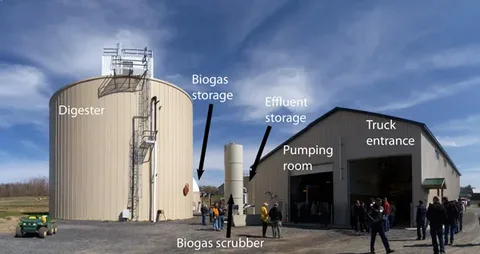
A community digester is a centralized biogas system that collects organic waste from multiple sources and converts it into renewable energy.
Unlike a household biogas system designed for one family, a community digester can support:
- Multiple households
- Farming cooperatives
- Schools and dormitories
- Hospitals and health centers
- Urban markets
- Community kitchens
The system works by collecting biodegradable materials such as:
- Food waste
- Livestock manure
- Agricultural residue
- Market waste
- Organic household waste
These materials are processed through anaerobic digestion, producing biogas that can be used for cooking, heating, or electricity generation.
At the same time, the system produces nutrient-rich organic fertilizer that supports local agriculture.
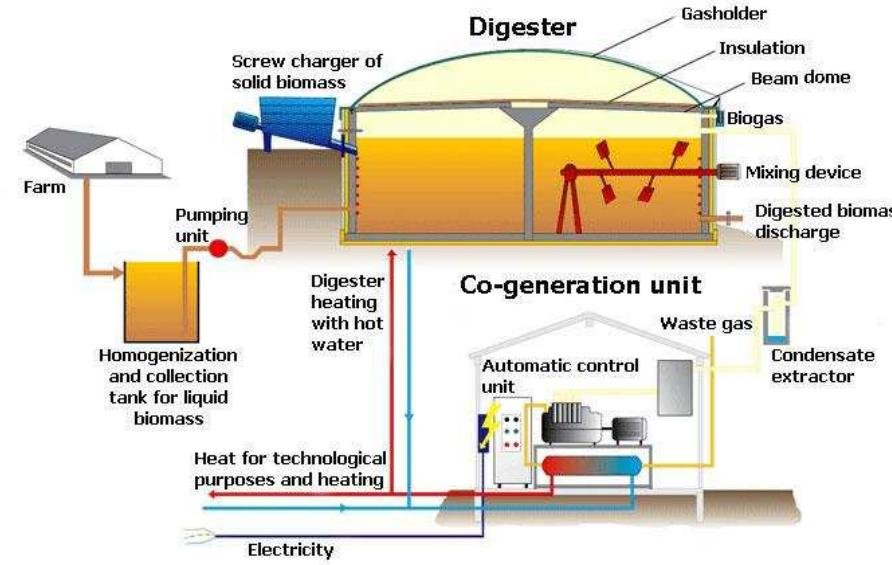
How the Community Digester Model Works
The process is simple but powerful.
Step 1: Waste Collection
Participating households or institutions contribute organic waste to a central collection point.
For example:
A neighborhood market may provide vegetable waste, nearby farms contribute manure, and households supply food scraps.
What was previously discarded becomes valuable fuel.
Step 2: Centralized Digestion
The collected waste enters a large biogas digester where natural microorganisms break down the material in an oxygen-free environment.
Over time, methane-rich biogas is generated safely and continuously.
Step 3: Energy Distribution
The biogas can then be distributed in several ways depending on the community setup:
- Shared cooking facilities
- Direct gas supply lines
- Community kitchens
- Small-scale electricity generation
- Institutional energy support
Step 4: Fertilizer Production
After digestion, nutrient-rich digestate remains.
This byproduct can be distributed to local farmers and community gardens as organic fertilizer, helping improve crop production while reducing dependence on chemical inputs.
Why Community Digesters Make Sense for Liberia
Liberia has many communities where centralized waste-to-energy systems could create meaningful impact.
Reduced Dependence on Charcoal
When multiple families share access to clean biogas, reliance on charcoal and firewood decreases — helping protect forests and reduce household expenses.
Cleaner Communities
Organic waste often creates sanitation challenges when unmanaged.
Community digesters help convert waste into something productive instead of allowing it to pile up or pollute local environments.
Affordable Shared Energy
Instead of every household carrying the burden of fuel costs individually, communities can benefit from economies of scale.
Shared systems can lower energy costs over time.
Better Health Outcomes
Biogas burns much cleaner than charcoal or firewood, reducing indoor smoke and improving air quality for women and children.
Agricultural Benefits
The organic fertilizer generated from digesters creates an additional economic opportunity for farmers, cooperatives, and food producers.
Where Community Digesters Could Work Best
The model is particularly effective in locations with consistent organic waste streams.
Potential opportunities in Liberia include:
Urban Markets
Markets generate large volumes of food waste every day, making them ideal candidates for waste-to-energy systems.
Farming Communities
Livestock manure and crop residue provide excellent feedstock for biogas production.
Schools and Boarding Facilities
Schools often produce food waste while also needing reliable cooking energy.
Health Institutions
Hospitals and clinics require consistent energy for cooking and sanitation-related needs.
Dense Residential Communities
Neighborhood-scale systems could support clusters of families seeking affordable alternatives to charcoal.
Challenges — and Why Smart Planning Matters
Community digesters require thoughtful planning to succeed.
Important considerations include:
- Proper system sizing
- Community participation
- Waste collection management
- Maintenance planning
- Safety systems
- Long-term operational oversight
This is why engineering, education, and local engagement are essential.
The technology works best when communities are involved from the beginning.
A New Energy Model for Liberia
Liberia does not need to follow the same energy path as the past.
The future of clean energy may not rely on massive infrastructure alone — it can also begin at the community level.
The community digester model represents something bigger than technology.
It represents cooperation.
A system where waste becomes opportunity, communities share resources, families breathe cleaner air, and energy becomes more sustainable and affordable.
Building Community Energy Solutions Together
At Grain Coast Renewable Energies, we are exploring scalable biogas systems designed for Liberian realities — from individual homes to entire communities.
Because clean energy should not be limited to a few.
It should be something communities can build together.
Powering Liberia's clean future through biogas systems that turn organic waste into reliable energy and organic fertilizer.
© 2026 Grain Coast Renewable Energies. All rights reserved.